
Let’s be real: safety gear for woodworkers isn’t the most exciting part of the craft. Nobody dreams about PPE for woodworking when they’re browsing for a new saw. But once you’ve had a wood chip fly at your eye, or your ears ring for hours after using a router, you start to take this stuff seriously.
I’m not here to scare you, but I do want to show you what I use in my own shop. This is the woodworking PPE I trust daily, just as important as my pencil or tape measure. It keeps me working comfortably and safely.

– Updated on
Key Takeaways
– PPE for woodworking is essential, even in a home shop.
– I use hearing protection, respirators, safety glasses, and gloves daily.
– The right workshop safety gear keeps you comfortable and prevents long-term damage.
– Don’t overlook less obvious items like footwear.
– Always keep a first aid kit nearby, just in case.
Disclosure: At zero cost to you, I may get commissions for purchases made through links in this post. I earn from qualifying purchases as an Amazon associate. Products featured are selected based on quality, performance, and reputation, regardless of affiliate relationships.
Table of Contents
PPE for Woodworking: What I Use Every Day (And Why It Matters)
Hearing Protection
Some tools are just loud. My table saw, miter saw, and router sound like jet engines. Right now, I use basic foam earplugs, nothing fancy, but they get the job done. That said, I’m planning to upgrade to Bluetooth hearing protection soon so I can keep listening to the radio or a podcast even while running a machine. Protecting your ears doesn’t have to mean total silence.
“If constant ringing in your ears starts to feel normal, you’re already too late.”
Dust Protection
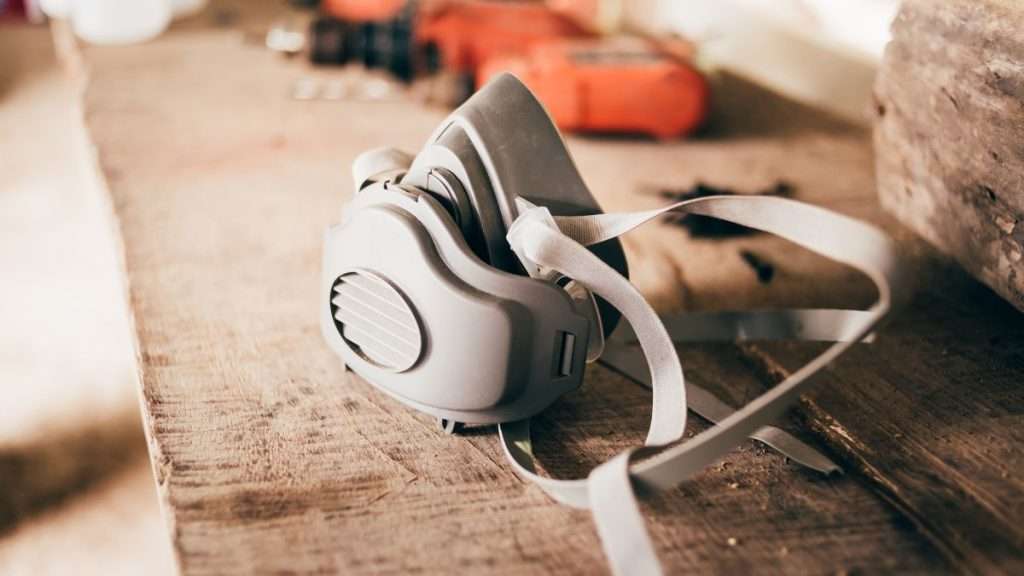
I work a lot with MDF and hardwood. That means fine dust everywhere. It’s in the air, on your clothes, even in your coffee mug. For most sanding and cutting, I wear a P3-rated dust mask with a valve. It’s lightweight, quick to put on, and gets the job done without feeling bulky.
But for longer sessions, or when I’m working with heavy dust or questionable materials, like reclaimed wood or glued boards, I switch to a half-face respirator with replaceable filters. It’s a bit more of a hassle to wear, but it seals better and offers more protection.

Pros
Dust mask:
– Lightweight and comfortable
– Quick to put on
– Affordable and easy to replace
Half-face respirator:
– Superior protection
– Better seal around the face
– Filter cartridges last longer in heavy use
Cons
Dust mask:
– Doesn’t seal as well as a respirator
– Not ideal for high-dust or long sessions
Half-face respirator:
– Heavier and less comfortable over time
– Takes a few seconds longer to put on
– More expensive upfront
Depending on what I’m doing that day, I’ll choose whichever makes the most sense. One isn’t necessarily better than the other, they just serve different purposes.
No products found.
Eye Protection
Chances are, you’ve had a piece of wood kick back or a screw fly off in a weird direction. I had a screw shoot out of my drill once and miss my eye by inches. Since then, I always wear safety glasses. Because I wear prescription glasses, regular safety glasses don’t fit well over them. So I had a custom pair made, with the same strength as my everyday glasses, but with impact-resistant lenses and side protection built in. They’re comfortable, clear, and I never have to choose between seeing clearly and staying safe.
If you don’t wear glasses, a regular pair of well-fitting safety glasses is usually more than enough. Just make sure they’re rated for impact and fit snugly without slipping.
No products found.
Hand Protection
I wear work gloves for heavy lifting, handling rough lumber, or breaking down reclaimed wood. Gloves give me a better grip, protect my hands from splinters, and help avoid cuts when working with old nails or sharp edges.
But when it comes to power tools, like table saws, jointers, or routers, I never wear gloves. They can get caught in moving parts, which makes them more dangerous than helpful in those situations. Bare hands give you better feel and control when you’re guiding material through a blade.
So the rule I follow is simple: gloves for handling, no gloves for operating. Once you understand the “why” behind it, it’s easy to decide what’s right in the moment.
No products found.
Footwear
I always wear non-slip work shoes in the shop, no exceptions. Whether I’m handling heavy boards, stepping over cords, or sweeping up sawdust, solid footing makes a huge difference. A slip or stubbed toe might not sound like much, but in a woodshop, it can lead to real accidents.
That’s why I’ve invested in a high-quality pair of work shoes. They weren’t cheap, but they’re built to last. I wear them every single day, and they’ve held up for nearly a year of constant use. No blisters, no worn soles, and they still give great support.
If you’re serious about your workshop safety, don’t cut corners here. A reliable pair of shoes might be the most overlooked part of your PPE for woodworking, but it’s one of the most important.
Best woodworking shoes for men:
No products found.
Best woodworking shoes for women:
No products found.
Always Have a First Aid Tool Kit In Your Workshop!
And here’s something most folks overlook: being ready for when things do go wrong. I keep a well-stocked first aid kit in my shop, based on the kinds of injuries that can actually happen. I store it low to the ground, in one of the bottom drawers of my cabinets. That way, if I ever fall and can’t get up right away, I can still reach it. Here’s how I put that kit together.
Final Thoughts
You don’t need to gear up like an astronaut to stay safe. But a few smart habits and the right PPE for woodworking go a long way. Don’t think, “I’ve never had an accident.” Think, “I want to keep it that way.”




Leave a Reply