
Interlocking floor tiles come up a lot when beginners think about upgrading a workshop floor. They sound comfortable, practical, and easy. But once you start using them in a real woodworking shop, the picture becomes more nuanced. There are clear advantages, and there are equally clear limitations.
When you look at the pros and cons of interlocking floor tiles for a woodworking shop, the answer is rarely a simple “good” or “bad”. It depends on how your shop is set up and how you actually work in it.
I’ve been using interlocking floor tiles in my own workshop for about a year now. Some of the benefits were obvious right away, especially comfort and warmth underfoot. Other aspects only became clear over time, particularly once mobile tools and rolling equipment entered the mix. That contrast is exactly what this article is about.
Why You Can Trust This Advice
- I’ve been using interlocking floor tiles in my own 3×6 meter garage workshop for about a year, long enough to notice what actually improves daily comfort and what quietly gets in the way.
- My shop setup is small and practical, with fixed stations and some mobile tools, so the observations here come from real movement, not a showroom layout.
- I pay attention to how things feel over time, how tools behave on the floor, and where small annoyances show up after weeks of normal use, not just on day one.

– Updated on
Key Takeaways
– You’ll understand how interlocking floor tiles change the feel of a workshop over long sessions, not just on day one.
– You’ll see why comfort and warmth improve faster than expected, while some limitations only show up with daily use.
– You’ll notice how fixed tools and rolling tools behave very differently on a tiled shop floor.
– You’ll learn which shop layouts benefit most from interlocking tiles and which ones tend to feel restricted over time.
– You’ll understand how small, real shop habits often matter more than the flooring material itself.
Disclosure: At zero cost to you, I may get commissions for purchases made through links in this post. I earn from qualifying purchases as an Amazon associate. Products featured are selected based on quality, performance, and reputation, regardless of affiliate relationships.
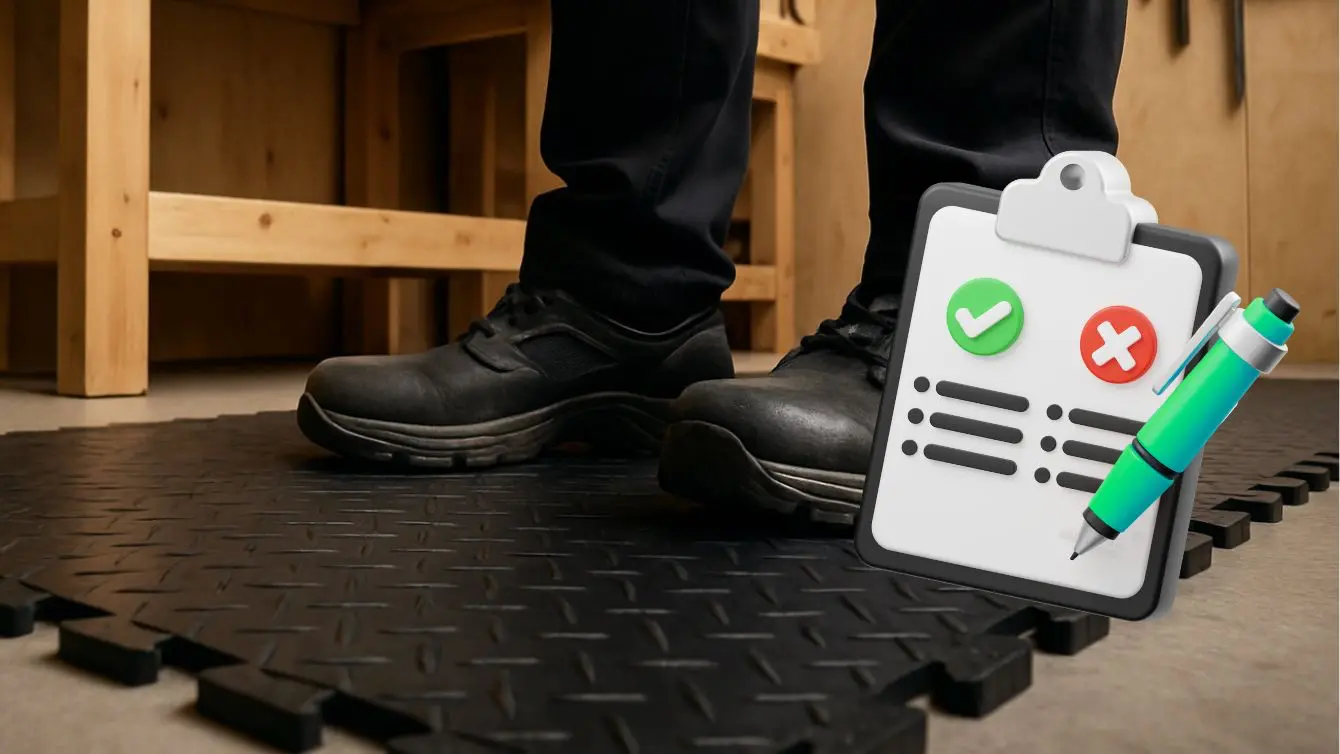
Table of Contents
Pros and Cons of Interlocking Floor Tiles in a Woodworking Shop
When people talk about the pros and cons of interlocking floor tiles, the conversation often stays vague. Comfortable. Easy. Temporary. Those words sound fine, but they do not say much until you place them inside a real woodworking shop with real habits and real routines.
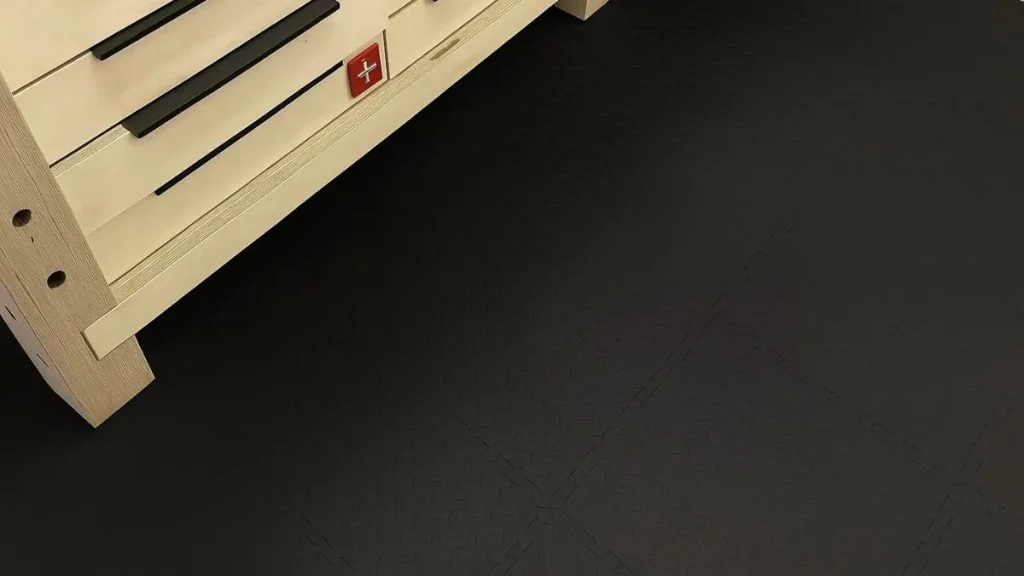
In a small garage workshop like mine, about 3×6 meters, the positives show up quickly. Standing and walking feel softer than bare concrete. Not dramatically, and not in the same way an anti fatigue mat feels, but enough to notice after a longer session. There is also a subtle warmth. Concrete always feels cold, even when the air temperature is fine. Interlocking floor tiles take the edge off that cold feeling, which makes the space feel more welcoming during daily use. That effect overlaps naturally with how interlocking tiles help with cold workshop floors.
The downsides are just as real. Interlocking floor tiles create a floating surface, and that surface behaves differently once weight, movement, and vibration enter the picture. In a woodworking shop, those forces are constant. This is why the pros and cons of interlocking floor tiles matter more here than in a gym or storage space. They are not good or bad by default. They simply respond to how you work and how your shop is set up.
| Aspect | What works well | Where it falls short |
|---|---|---|
| Comfort underfoot | Softer than bare concrete and easier on the body during longer sessions | Does not replace the relief of an anti fatigue mat |
| Temperature feel | Takes the edge off a cold concrete floor | Does not actively warm the space |
| Tool stability | Works well under fixed benches and stationary machines | Shifts or flexes with rolling tools and carts |
| Daily workflow | Fits calm, predictable shop layouts | Becomes noticeable in highly mobile setups |
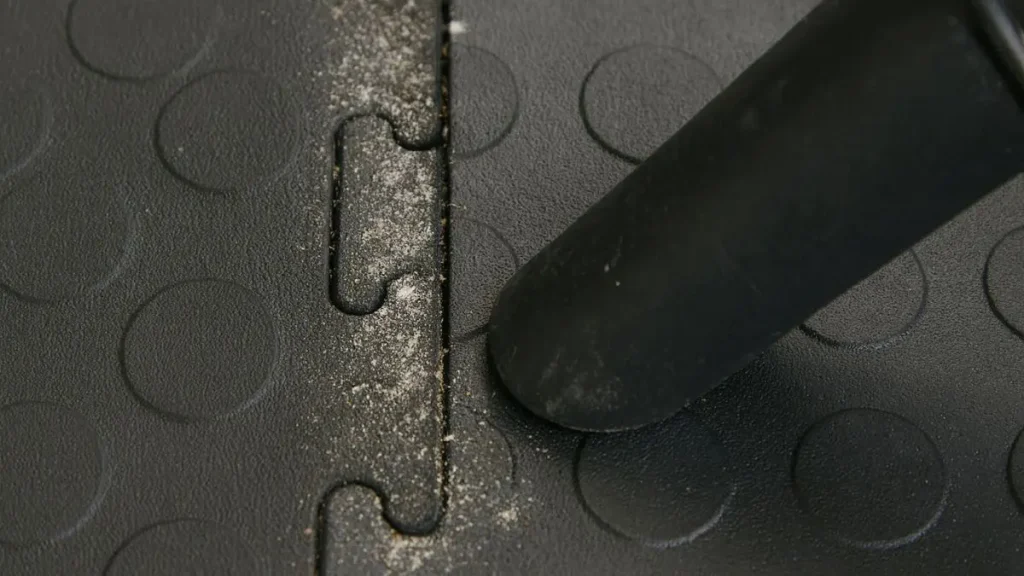
| Dust and cleaning | Easy to sweep on the surface | Fine dust settles between seams over time |
| Long-term use | Holds up well when the layout stays stable | Small annoyances grow if the shop keeps changing |
If you are still unsure what these floors actually are at a basic level, what interlocking floor tiles are and how they work helps frame the rest of this discussion.
The Real Advantages in Small and Calm Shop Setups
In a calm shop layout, interlocking floor tiles can make a noticeable difference. By calm, I mean a setup where most tools stay in place and daily movement follows a predictable pattern.
The biggest advantage is comfort. Long sessions at the workbench feel less tiring. Knees and feet take less of a beating compared to standing directly on concrete. Over time, that adds up. The second advantage is temperature. The tiles do not make the shop warm, but they do make the floor feel less harsh, especially in colder months.
There is also a quieter psychological effect. A tiled shop floor feels more intentional. More finished. For beginners, that matters more than expected. It turns the workshop into a place you enjoy being in, not just a cold garage you tolerate between projects.
Interlocking floor tiles also make sense in situations where permanence is not an option. Rented spaces. Shared garages. Temporary workshops. In those cases, a floating floor that can be removed later without damage fits the reality of the space.
Where the Limitations Start to Show
The limitations appear once movement becomes part of your workflow. This is where many beginners underestimate the difference.
Interlocking floor tiles do not like rolling weight. A table saw on wheels. A mobile miter saw station. Rolling cabinets. Even a shop cart loaded with lumber. The tiles can flex slightly, shift over time, or separate at the seams. Individually, these movements are small. Repeated daily, they become noticeable and eventually annoying.
This is why interlocking tiles workshop floor problems are rarely dramatic, but often persistent. Fixed machines are usually fine. Mobile machines expose the weak spots. That difference shapes the entire experience.
Dust is another quiet issue. Woodworking dust behaves differently than general dirt. It is finer, lighter, and more persistent. It finds seams. It settles between tiles. Over time, cleaning becomes less about sweeping and more about managing buildup. This is one of the most common interlocking floor tiles dust issues people do not expect at first. In my shop, keeping seams cleaner became easier once I paired the floor with No products found. that stays quiet enough for quick daily cleanups.
Fine wood dust behaves differently than general dirt, something that becomes clearer once you understand how small airborne particles settle and linger in enclosed spaces.
None of this makes the tiles unusable. It simply defines where they stop being ideal.
Stability and Weight in a Woodworking Context
Stability is often mentioned, but rarely explained clearly. In the context of the pros and cons of interlocking floor tiles, stability depends almost entirely on how weight is applied.
A heavy workbench that never moves is usually fine. The weight spreads across multiple tiles. A stationary drill press behaves similarly. Problems start with point loads combined with motion.
Here is a simple way to think about it:
| Shop Element | Behavior on Tiles | Long-Term Feel |
|---|---|---|
| Fixed workbench | Stable | Predictable |
| Stationary machine | Stable | No real issues |
| Rolling table saw | Unstable | Gradual annoyance |
| Mobile storage | Mixed | Depends on weight |
This is why interlocking tiles workshop stability is not about collapse or danger. It is about tolerance. How much movement you are willing to accept in your daily workflow.
If your shop already relies on rolling tools, this becomes part of the decision. It sits alongside other considerations like how much space you leave around a workbench, because movement and layout are always connected.
A Quiet Observation After a Year of Use
After about a year, one thing became clear to me. The tiles themselves did not really change. My perception did.
At first, the comfort stood out. Later, what mattered more was how often I had to think about the floor. In calm phases of work, I forgot it was there. During phases where I moved tools more often, the floor asked for attention.
That difference tends to grow over time, which is why how long interlocking tiles last in a workshop is less about material failure and more about how your workflow evolves.
A good shop floor disappears from your thoughts most of the time. Interlocking floor tiles do that well in some setups and poorly in others. That balance is the core of the pros and cons of interlocking floor tiles in a woodworking shop.
Quick Tip on Mixing Tiles and Mats
One practical approach that works better than expected is combining interlocking floor tiles with localized anti fatigue mats. Tiles provide general comfort and warmth. Mats handle the high impact zones where you stand the longest.
This avoids relying on tiles for something they are not designed to do, while still benefiting from what they do well.
If installation questions are part of your hesitation, how interlocking floor tiles are installed in a small workshop (link: “How to Install Interlocking Floor Tiles in a Workshop”) fits naturally into this part of the process.
When Interlocking Floor Tiles Make Sense and When They Do Not
Looking at the pros and cons of interlocking floor tiles becomes easier when you frame it around fit, not quality.
They tend to make sense when:
- Most tools are fixed in place
- The shop layout stays consistent
- Comfort and warmth matter more than mobility
- The space is rented or temporary
They tend to disappoint when:
- Many tools are on wheels
- Heavy machines are moved frequently
- Perfect stability is expected everywhere
- Cleaning dust between seams becomes frustrating
At this stage, some people also start wondering what options exist beyond theory. Seeing a small, realistic selection of interlocking tiles that actually work in woodshops can help ground expectations without pushing any single choice.
A Few Last Thoughts
Looking at the pros and cons of interlocking floor tiles is really about slowing down and matching expectations with reality. In some workshops, they quietly improve comfort and make long sessions easier on the body. In others, they introduce small compromises that only show up once the shop is fully in use.
Neither outcome is surprising once you understand how these floors behave. What matters is noticing where your own habits sit in that balance, and letting that guide the choice rather than the promise of a quick upgrade.
This sub-supporting post is part of a smaller path in my site structure, right below the main supporting article that led you here.
Cluster Post:
Learn How to Prepare a Woodworking Shop in 3 Easy Steps
This cluster post looks at the bigger picture of getting a workshop ready, where flooring is just one of several practical decisions that shape how the space feels and functions.
Supporting Article (the one that leads into this supporting article):
A Clear and Simple Workshop Flooring Overview of All Types
That supporting article narrows the focus to workshop floors specifically, laying out the main options so details like interlocking tiles can be weighed more calmly and in context.
Frequently Asked Questions
Do the pros and cons of interlocking floor tiles really matter in a woodworking shop?
Yes, they matter more than most beginners expect. In a woodworking shop, small details show up through daily use, not just first impressions. Looking at the pros and cons of interlocking floor tiles helps avoid surprises once the shop is fully in motion.
Are interlocking floor tiles comfortable enough for long shop sessions?
They are more comfortable than bare concrete, especially when standing or walking for longer periods. They do not replace an anti fatigue mat, but they noticeably soften the feel of the floor. Over time, that small change can make the shop feel less tiring.
Do interlocking floor tiles work well with mobile tools and rolling carts?
This is where limitations become clear. Interlocking tiles under heavy tools that roll regularly tend to shift or flex over time. Fixed machines are usually fine, but frequent movement introduces small frustrations that add up.
How hard are interlocking floor tiles to keep clean in a woodshop?
They are easy to sweep on the surface, but fine dust can settle between seams. That does not ruin the floor, but it does change how often and how carefully you clean. It is something most people only notice after a few months.
Are interlocking floor tiles a good option for a rented or temporary workshop?
Yes, that is one of their strongest use cases. They improve comfort without making permanent changes to the space. For temporary setups, that balance often feels worth it.







Leave a Reply