
A concrete workshop floor is not something you choose. It is simply there. Cold, hard, and unforgiving once you spend real time on it. That was the reason I added interlocking floor tiles to my shop about a year ago. Not to test durability. Just to make the space easier on my body.
The question about lifespan came later. Quietly. Usually right after the first tool cart rolled across the floor. That is when you start wondering how long do interlocking floor tiles last once a workshop stops being static and starts moving.
In most small woodworking shops, interlocking floor tiles can last for years, but only if expectations are set correctly. Standing and walking are easy on them. Rolling carts, mobile bases, and repeated turning are not. That difference matters more than thickness, price, or marketing claims.
After about a year of daily use, I have not replaced a tile. That does not mean the floor is unchanged. It means wear shows up slowly, in patterns, and almost always where wheels travel the most.
Why You Can Trust This Advice
- I have been working on interlocking floor tiles in my own small 3×6 meter garage workshop for about a year, with daily foot traffic and rolling carts moving across them.
- I did not install them as a long-term experiment, but as a comfort upgrade over bare concrete, which means what I notice most is how they behave quietly over time.
- My observations come from normal shop habits, moving tools around, standing for long sessions, and paying attention to small changes rather than waiting for something to fail.

– Updated on
Key Takeaways
– You’ll understand why lifespan depends more on movement patterns than on simple weight or thickness.
– You’ll see how rolling carts and mobile tools shape wear over time in a small shop.
– You’ll notice which early signs of wear actually matter and which ones usually don’t.
– You’ll learn why interlocking tiles tend to fail gradually instead of all at once.
– You’ll understand how comfort and durability often grow together in real workshop use.
Disclosure: At zero cost to you, I may get commissions for purchases made through links in this post. I earn from qualifying purchases as an Amazon associate. Products featured are selected based on quality, performance, and reputation, regardless of affiliate relationships.
Table of Contents
How Long Do Interlocking Floor Tiles Last in Real Workshop Use
This is where the question becomes concrete. Not theoretical lifespan, but how long interlocking floor tiles last once a shop includes movement.
In a small woodworking space, interlocking floor tiles often last several years under foot traffic alone. The moment rolling equipment becomes part of daily workflow, the interlocking floor tiles lifespan starts depending on how that movement happens.
After about a year in my shop, tiles in low-traffic zones still feel unchanged. Areas where carts roll repeatedly tell a different story. Not dramatic damage, but subtle changes in how joints feel and how tiles respond under load.
That contrast explains most confusion around lifespan. Static weight is usually boring. Repeated rolling is not.
| Workshop Use Case | Typical Stress Level | Expected Outcome |
|---|---|---|
| Standing and hand tool work | Low | Tiles remain stable for many years |
| Occasional rolling carts | Medium | Slow joint wear over time |
| Frequent rolling and turning | High | Earlier joint fatigue |
How long do interlocking floor tiles last is therefore not one answer. It is a range shaped by movement patterns.
What Actually Causes Interlocking Floor Tiles to Wear Out
Most people expect visible damage. Cracks. Broken corners. Sudden failure. That is rarely how it starts.
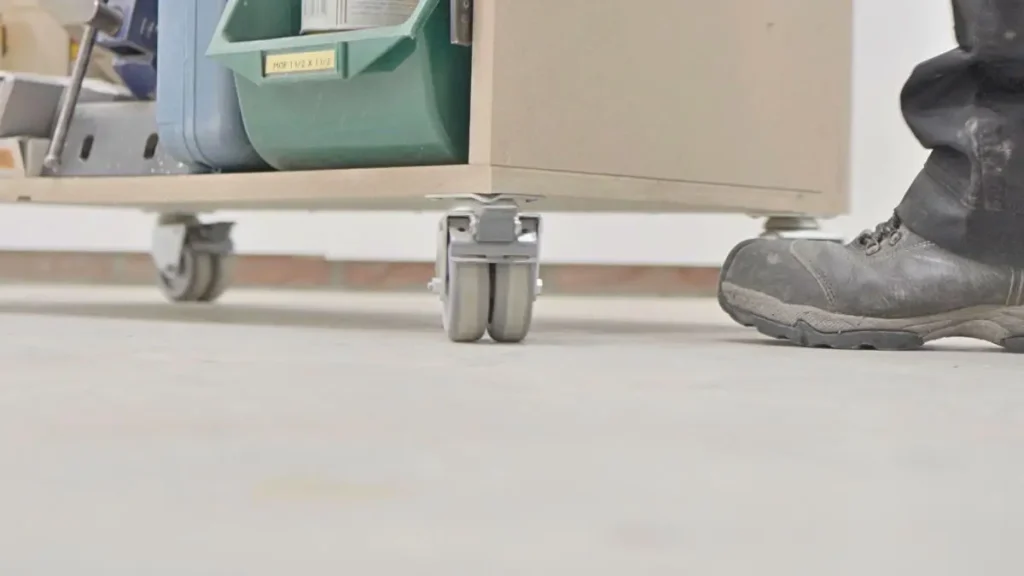
What causes wear is repetition. The same cart following the same path. The same pivot turn near a workbench. Over time, this is why people ask do interlocking floor tiles wear out even when the surface still looks fine.
Common causes show up consistently.
- Rolling carts with small hard wheels
- Pivoting under load instead of rolling straight
- Dirt and grit working into the joints
- Minor subfloor unevenness
The tiles themselves are often stronger than expected. The interlock is where stress concentrates. Over time, interlocking tiles separating over time becomes more likely in paths where wheels twist instead of roll.
This is also where questions about denting and cracking come from. Do interlocking floor tiles dent? Yes, under concentrated rolling loads. Will interlocking floor tiles crack under heavy tools? Rarely, unless the load moves or pivots repeatedly.
Underlying conditions matter too. Things like checking whether your workshop floor is level quietly influence long-term behavior.
Moisture can complicate this further, especially on concrete slabs where interlocking floor tiles trap moisture on concrete (link: “Do Interlocking Floor Tiles Trap Moisture on Concrete?” is under construction) under certain conditions.
Signs Your Interlocking Floor Tiles Are Reaching the End
Failure is usually slow. That is good news.
Early signs are easy to miss if you are not paying attention. A joint that feels looser. A tile that shifts slightly after a cart passes. A corner that no longer locks as tightly as it used to.
These signs do not mean replacement is needed immediately. They mean wear has started.
When people ask when to replace interlocking floor tiles, the honest answer is often later than expected. Surface wear rarely matters. Repeating joint movement does.
It helps to separate three situations.
- Cosmetic surface wear
- Local joint fatigue in rolling paths
- Structural failure that keeps returning
Only the last one usually calls for replacement. Even then, the modular system often allows selective fixes instead of full removal.
Understanding how interlocking tiles are installed in a workshop (link: “How to Install Interlocking Floor Tiles in a Workshop” is under construction) explains why this staged failure pattern exists.
How to Make Interlocking Floor Tiles Last Longer in a Workshop

This is where habits matter more than materials.
If you want to know how to make interlocking floor tiles last longer, the answer is rarely about buying thicker tiles. It is about reducing unnecessary stress from rolling movement.
A few practical adjustments help more than most upgrades.
- Use larger, softer wheels on carts
- Roll straight whenever possible
- Avoid pivoting under heavy load
- Keep joints free of fine dust
People often underestimate cleaning. Knowing how to clean interlock tiles properly (link: “How to Clean Interlocking Floor Tiles” is under construction) helps prevent grit from turning every roll into abrasion.
There is also a realistic ceiling. Interlocking floor tiles are not industrial flooring. They are a comfort and protection layer. When expectations stay aligned, they perform well.
Eventually, replacement becomes the logical next step. Not because the tiles failed overnight, but because years of rolling, turning, and small stresses have added up. For that moment, I put together a comparison where I look at interlocking floor tiles designed for woodworking environments, focusing on how they handle carts, joints, and real shop use, and helping you make a grounded choice when replacement actually makes sense.
A Few Last Thoughts
Interlocking floor tiles are honest about what they are. They trade absolute durability for comfort and flexibility.
Once you accept that rolling movement is the real stress factor, the question of how long do interlocking floor tiles last becomes easier to answer. They last as long as the shop allows them to.
In a small space, that balance usually feels fair. Comfort first. Awareness second. Longevity follows.
Cluster Post:
A Clear and Simple Workshop Flooring Overview of All Types
This wider piece looks at how different floor surfaces behave in real shops, from bare concrete to layered solutions, and why those differences matter over time.
Supporting Article (the one that leads into this supporting article):
What Are Interlocking Floor Tiles? a Clear Explanation
That article narrowed the focus to how interlocking tiles work in practice, which naturally leads into questions about comfort, cold concrete, and day to day use.
Frequently Asked Questions
Do interlocking floor tiles really last in a small woodworking shop?
Yes, they usually do. In a small shop with normal foot traffic and rolling carts, they tend to hold up for years rather than months. In my own garage shop, they have stayed stable and predictable so far, which is often what matters most in daily use.
How long do interlocking floor tiles last when you use tool carts and mobile bases every day?
Rolling equipment does shorten the lifespan compared to simple foot traffic, but not in a dramatic way. Wear tends to show up slowly and only in specific paths where carts move the most. As long as the rest of the floor stays calm, the system usually keeps doing its job.
Is it normal if some tiles start feeling looser over time?
It can happen, especially in areas with repeated movement. That does not automatically mean failure. Often it is a sign to clean the joints or slightly adjust how carts move through the space.
At what point does it make sense to replace interlocking floor tiles?
Most people replace tiles later than they expect. According to when to replace interlocking floor tiles in real shops, the trigger is not surface wear but recurring joint problems that no longer settle back into place. Until then, small changes are usually manageable.
Are interlocking floor tiles a bad idea on top of concrete in a garage?
Not at all. Concrete is actually a common base for them. As long as the slab is reasonably flat and dry, the tiles mostly respond to how the shop is used above them, not to the concrete itself.
A Bit More Context
Questions about how long interlocking floor tiles last often connect to how floors handle rolling loads and repeated movement over time.
- How rolling wheel loads concentrate pressure differently than static weight
- General floor load behavior in workshops and garages
These basics explain why wear usually shows up where movement repeats, not where machines simply sit still.







Leave a Reply