
A cold concrete floor has a quiet way of draining energy. It does not announce itself. You notice it slowly. First in your feet, then in your legs, until standing still starts to feel heavier than it should.
That was exactly the situation in my own workshop, especially during winter. The space itself was workable, but the floor never really was. After a while, the same question keeps coming back in small shops like mine. Do interlocking floor tiles help with cold floors, or do they just make the problem feel smaller without actually fixing anything?
From real shop use, the answer is yes, interlocking floor tiles help with cold floors. Just not in the way most beginners expect. They make the floor easier to stand on and take the edge off cold concrete, without turning the space into something warm or insulated. Once that distinction is clear, the rest of the decision becomes far less confusing.
Why You Can Trust This Advice
- I work on a hard concrete floor in a small garage shop, and winter is when floor comfort becomes impossible to ignore.
- I used interlocking floor tiles long enough to notice where they help and where they stop helping, especially during long sessions standing still.
- When the tiles were not enough on their own, I adjusted my setup instead of forcing a single solution to do everything.

– Updated on
Key Takeaways
– You’ll understand why cold concrete feels harsher than the room temperature suggests.
– You’ll see how tiles change comfort without actually warming the space.
– You’ll notice when tiles are enough on their own and when they fall short.
– You’ll learn how standing still reveals floor comfort more than walking around.
– You’ll understand why small shop choices often come down to feel, not theory.
Disclosure: At zero cost to you, I may get commissions for purchases made through links in this post. I earn from qualifying purchases as an Amazon associate. Products featured are selected based on quality, performance, and reputation, regardless of affiliate relationships.
Table of Contents
Do Interlocking Floor Tiles Help with Cold Floors in a Real Workshop?
The short answer is yes. Interlocking floor tiles help with cold floors by changing how the floor feels under your feet.
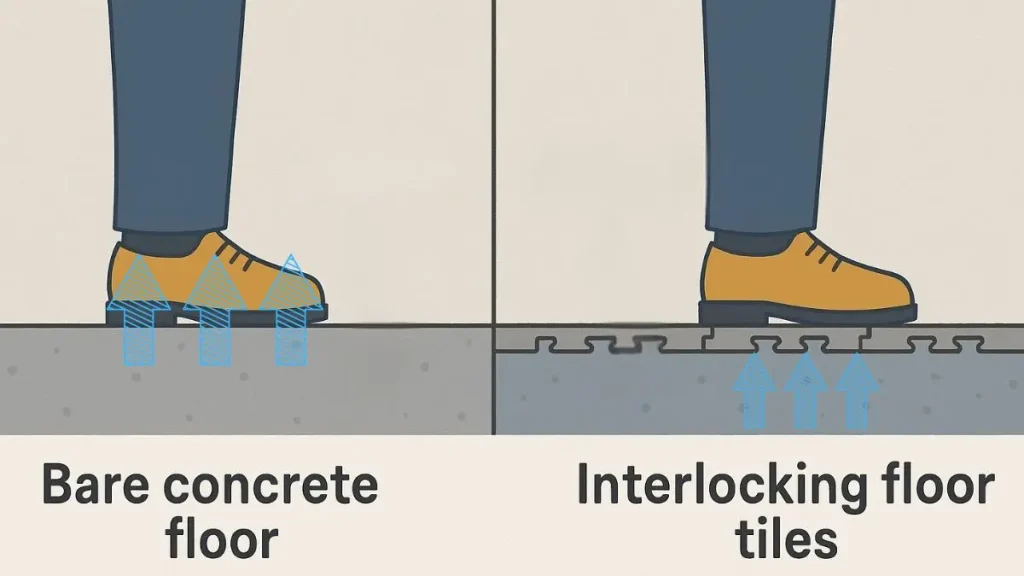
Concrete feels cold because it constantly pulls heat away from your body. Even when the air temperature is reasonable, the slab underneath acts like a heat sink. Interlocking floor tiles interrupt that direct contact. They create a small separation between your feet and the concrete floor. That alone changes the experience.
What they do not do is insulate the room in any meaningful way. Do interlocking floor tiles help with cold floors by raising room temperature? No. Do interlocking floor tiles help with cold floors by making long periods of standing more tolerable? Absolutely.
Many beginners expect warmth. What they actually get is reduced discomfort. Once that expectation is set correctly, interlocking floor tiles make a lot more sense as part of a small shop setup.
This kind of choice usually sits next to broader questions about how different workshop flooring options behave in real use.
When Interlocking Tiles Actually Make a Noticeable Difference
Interlocking floor tiles help with cold floors most when the problem is contact, not climate. That sounds abstract, but it becomes obvious once you feel it.
Cold concrete underfoot, especially in winter
On a bare concrete floor, winter sharpens everything. Cold creeps up through your shoes and lingers. Interlocking tiles soften that effect. They do not make the floor warm, but they slow how quickly the cold reaches you. That alone reduces fatigue.
This is why people often ask whether interlocking tiles keep a concrete floor warmer. They do, but only in terms of surface feel, not actual temperature.
Standing still versus moving around
The difference shows up the moment you stop moving. While walking, most floors feel acceptable. When you stand in one place jointing, sanding, or assembling, the tiles start to earn their place.
Many small shop owners notice that interlocking floor tiles feel warmer to stand on even though the room itself has not changed. That perception is real, and it explains why tiles help some people more than others.
Short sessions versus long days
If you work in short bursts, the improvement may feel minor. If you spend long hours in the shop, especially during colder months, interlocking floor tiles help with cold floors by delaying discomfort. That delay often determines whether you keep working or call it a day.
This is where tiles overlap with other ways to fix a cold workshop floor without rebuilding everything .
Warmer Feel Versus Real Insulation
A lot of confusion comes from language. Warm, insulated, comfortable. These words get mixed together.
Do interlocking floor tiles insulate a concrete floor? Not in the way insulation normally works. The R-value is low. Seams allow air movement. Edges still meet cold concrete.
What they do is reduce direct thermal transfer. That is why garage floor tiles or modular floor tiles feel more forgiving than bare concrete, even when the thermometer does not move.
Here is a simple way to think about it:
| Aspect | Concrete Floor | Interlocking Floor Tiles |
|---|---|---|
| Surface feel | Very cold | Less harsh |
| Heat transfer | Immediate | Slowed down |
| Room temperature | Unchanged | Unchanged |
| Standing comfort | Low | Noticeably better |
This balance is also where many of the practical pros and cons of interlocking floor tiles come into play. Tiles improve comfort, but they do not replace insulation or heating.
Moisture, Condensation, and What Happens Under the Tiles
One of the quieter concerns around interlocking floor tiles is moisture. It is a fair question.
Will interlocking tiles trap moisture on concrete? Sometimes, under the right conditions. Concrete can release moisture, especially in garages, basements, and sheds. When warm air meets a cold slab, condensation can form.
Interlocking floor tiles do not cause that moisture, but they can hide it. Condensation under interlocking floor tiles on concrete is more likely when airflow is poor, humidity is high, and temperature swings are large.
In many shops, moisture evaporates slowly without causing issues. In others, it lingers. That is why ventilation matters more than the tiles themselves. Air movement and humidity control determine whether trapped moisture becomes a real problem.
If this is a concern in your space, it is worth understanding what actually happens when moisture builds up under interlocking tiles (link: “Do Interlocking Floor Tiles Trap Moisture on Concrete?” is under construction).
A Quick Pro Tip Before You Commit
If you are unsure, test the idea before covering the whole shop.
Lay down a small section of interlocking floor tiles where you stand the most. Leave it there for a few cold days. Pay attention to how your feet feel after an hour, not after five minutes.
Before committing to interlocking floor tiles, take a moment to check a few simple things:
- How cold the concrete feels after standing still for 20 to 30 minutes
- Whether you tend to stand in one place or move around most of the time
- If winter sessions are short or stretch into longer hours
- Whether moisture or dampness has ever been an issue in your space
- If one or two standing zones matter more than covering the whole floor
That short test often tells you more than any specification sheet.
When the decision feels right, knowing how interlocking floor tiles are installed in a small workshop (link: “How to Install Interlocking Floor Tiles in a Workshop (Beginner Steps)” is under construction) helps keep expectations realistic.
A Short Real Shop Moment
In my own shop with a hard concrete floor, interlocking floor tiles made winter sessions easier, but not cozy. The cold stopped biting as quickly, and standing felt less punishing. That alone was worth it.
Over time, I noticed that the places where I stood the longest still needed more help. That is where an anti-fatigue mat earned its spot. The tiles handled the general discomfort. The mat handled the long sessions.
That combination clarified exactly what interlocking floor tiles help with, and what they do not.
When Interlocking Tiles Are Not Enough
There are situations where interlocking floor tiles help with cold floors, but still fall short.
If your shop stays near freezing for long periods, comfort layers alone will not solve it. If moisture is persistent, surface solutions only hide the symptom. If you want the room itself to hold heat, insulation matters more than anything underfoot.
Longevity also plays a role here. Knowing how long interlocking tiles last in a real workshop environment helps set realistic expectations over time.
In those cases, attention shifts toward how to insulate a workshop floor without creating new problems.
Interlocking floor tiles are a comfort layer. They are not a climate solution. Understanding where that line sits saves a lot of frustration.
A Few Last Thoughts
Cold floors often get blamed on the space, when they are really just a reminder of what you are standing on. Interlocking floor tiles help with cold floors in a specific, grounded way. They soften the experience without pretending to change the room itself.
That balance matters. Comfort does not need to be dramatic to be useful. Sometimes it is enough that the floor stops demanding your attention, so the work can have it instead.
This question usually reconnects with the bigger picture of shop setup, where materials, comfort, and long-term choices quietly meet.
This sub-supporting post is part of a smaller path in my site structure, right below the main supporting article that led you here.
Cluster Post:
A Clear and Simple Workshop Flooring Overview of All Types
This wider piece looks at how different floor surfaces behave in real shops, from bare concrete to layered solutions, and why those differences matter over time.
Supporting Article (the one that leads into this supporting article):
What Are Interlocking Floor Tiles? a Clear Explanation
That article narrowed the focus to how interlocking tiles work in practice, which naturally leads into questions about comfort, cold concrete, and day to day use.
Frequently Asked Questions
Do interlocking floor tiles help with cold floors in an unheated garage?
Yes, interlocking floor tiles help with cold floors by reducing direct contact with the concrete. They make standing feel less harsh, especially in winter. The space itself stays cold, but your body does not feel it as quickly.
Will interlocking floor tiles actually make my workshop warmer?
No, they do not change the air temperature or heat the room. What they change is how the floor feels under your feet. That difference is subtle, but it often matters more than people expect during longer sessions.
Are interlocking tiles enough on their own for long hours of standing?
For some people, yes. For others, they are only part of the solution. In my own shop, they improved overall comfort, but the spots where I stood the longest still benefited from an additional mat.
Is moisture or condensation something I should worry about under the tiles?
It can be, depending on humidity, airflow, and how cold the concrete gets. Condensation under interlocking floor tiles on concrete is possible in damp or poorly ventilated spaces. In many cases it stays minor, but it is something worth being aware of.
Can I install interlocking floor tiles gradually instead of all at once?
Yes, and that is often a sensible approach. Laying a small section first helps you understand how they feel in your own shop. That experience is usually more useful than trying to predict the outcome on paper.









Leave a Reply