
After a few long days at the bench, most small-shop woodworkers quietly find themselves wondering: are anti fatigue mats worth it. The question usually comes from tired ankles, a stiff lower back or that subtle tension that settles in when concrete reminds you it has no softness to give. The honest answer starts with what a cushioned layer actually changes. It spreads pressure, slows fatigue and gives your stance a small freedom to adjust so joints do not carry every bit of the load alone. So, yes, anti fatigue mats are worth it!
Some people only ask this after they first understand what is an anti fatigue mat. Knowing what it is and how it functions makes the question of value much clearer. Once that foundation is there, the rest becomes easier to measure.
In my own small 3 by 6 meter shop, that value showed up slowly. Nothing dramatic. Just quieter feet during sanding, fewer knots in my lower back after assembly and a calmer focus while fitting parts. Over time, those small details added up enough that the answer felt less like theory and more like lived experience.
Why You Can Trust This Advice
- I work long hours in a modest garage shop on bare concrete, which means I feel the floor during sanding, layout and assembly more than I feel anything else.
- I started with a thin budget mat first and later upgraded to a firmer one. The difference in stability, cleanability and comfort was obvious within a week.
- Most of my awareness grew from slow, careful work. That is where the body is still, weight settles and tiny shifts in stance matter most.

– Updated on
Key Takeaways
– You’ll understand are anti fatigue mats worth it without hype, using small-shop reality instead of marketing claims.
– You’ll see how the benefits of anti fatigue mats show up slowly through reduced tension and calmer stance.
– You’ll notice why firmness and support usually matter more than thickness or looks.
– You’ll understand how long do anti fatigue mats last relates to workshop dust, grit and glue.
– You’ll see why cleaner focus and steadier posture often make mats feel worth their place under your feet.
Disclosure: At zero cost to you, I may get commissions for purchases made through links in this post. I earn from qualifying purchases as an Amazon associate. Products featured are selected based on quality, performance, and reputation, regardless of affiliate relationships.

Table of Contents
Are Anti Fatigue Mats Worth It When You Work Long Hours
Reason 1: Reduced Joint Strain
The main question are anti fatigue mats worth it usually starts during tasks that take time. Sanding. Hand fitting. Careful marking. Hours pass while legs hold your posture steady. Bare concrete sends force straight back through your ankles and knees. That feeling tends to settle first in the lower back.
A cushioned mat interrupts that cycle by spreading weight more gently across the surface. It does not take the work away. It just removes the blunt hardness of concrete so your feet no longer feel pinned in one rigid position.
I noticed the difference most when sanding drawer fronts. Instead of tight ankles and a stiff back by the end, the hours felt quieter. That small relief is often the first sign that the benefits of anti fatigue mats are not imaginary. They simply show themselves slowly as the day stretches.
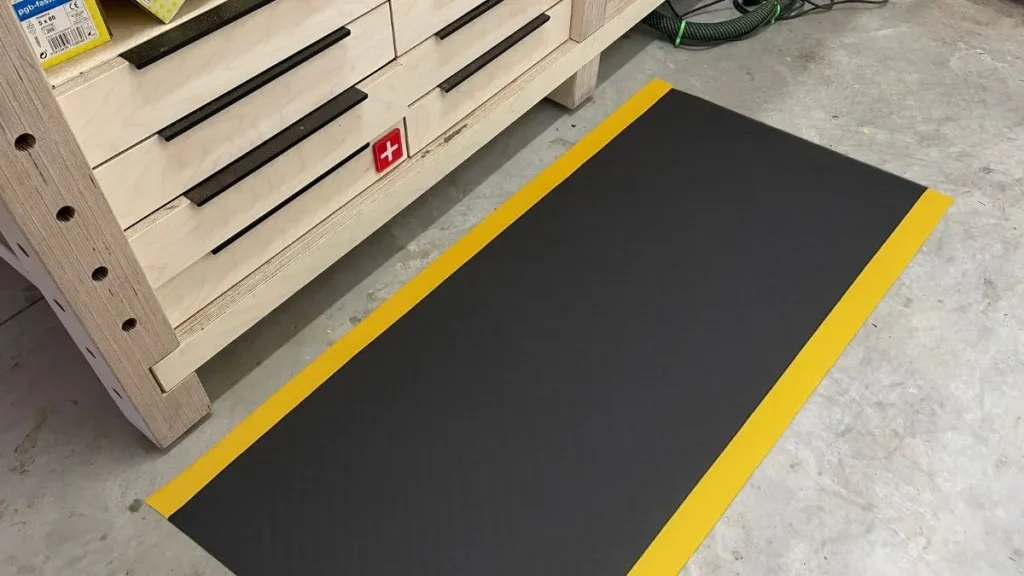
If you ever want a calm look at how that softer layer actually works, it sits close to the same thinking as understanding how do anti fatigue mats work. When the mechanics become clear, the question of worth becomes less blurry.
Reason2: Long-Session Comfort Leads to Better Focus
Many beginners expect something dramatic. But the most honest value often shows up in small ways:
- less stiffness after sanding
- quieter knees in winter
- ankles that do not feel locked
- steadier footing when concentration takes time
Most people feel those changes near the bench first. In a small shop, that is where the hours settle. Once you stand on a cushioned mat long enough, it becomes easier to see why are anti fatigue mats effective is really just a softer phrasing of the same core question.
There is no magic in it. Just a bit of layered material that lets pressure move differently under your stance.
Reason 3: Quiet Productivity Gains Over Weeks, Not Minutes
One of the quiet answers to are anti fatigue mats worth it hides in productivity. When the floor feels softer, the body relaxes a little. That calm posture tends to let your mind stay with the cut, the curve or the joint fit. You are less distracted by discomfort and more patient while shaping details.
It will not make you faster. But it helps you stay present. For woodworkers who value accuracy and slow care, that steady comfort is usually enough.
Some people only appreciate this after they learn what is an anti fatigue mat does at its simplest. When that definition settles, the worth question starts feeling less like doubt and more like a decision about comfort, durability and focus.
Where the Comfort Turns Into Real Shop Worth
Value always shows up where time stretches. A mat earns its place when careful woodwork holds you still longer than you meant to.
For me, the strongest sign came when long assemblies did not leave the same heavy feeling in my knees. Nothing changed except the layer under my shoes. And that was enough.
If you think about it, that sits close to the same logic that rises when you weigh how long do anti fatigue mats last. A slightly sturdier mat that feels better for years usually proves itself quietly through months of slow, patient work.
Durability, Dust and Glue
Small workshops are not delicate places. Wood dust settles everywhere. Grit from sanding shows up where you least expect. Glue squeeze-out eventually lands on the floor. When you ask are anti fatigue mats worth it, durability becomes part of that answer.
Firmer mats hold their shape longer. Smooth top surfaces wipe clean. Edges stay flat so you do not trip. Foam versions feel soft but can wear quicker if sanding dust lands every day. Rubber holds up better. Gel cores usually sit in the middle.
Here is a simple comparison based on feel, longevity and cleanup:
| Material | Feel Underfoot | Durability | Cleanup Ease |
|---|---|---|---|
| Foam | Softer with more give | Lower | Medium |
| Rubber | Firm but supportive | Higher | High |
| Gel Core | Even, cushioned pressure | Medium to High | Medium |
None of these are perfect. But sturdier mats usually last longer in a workshop with dust, glue and grit. And when something stays supportive for years instead of months, the worth becomes easier to justify.
Cost Compared to Time at the Bench

There is always a moment when a small-shop owner holds a mat in their hands and tries to weigh price against real value. I went through the same thing. But after months of sanding, shaping and hand fitting parts over a cushioned surface, the cost spread itself quietly across those hours.
That is usually how small workshop purchases feel when they pay you back. Not in speed. Not in something flashy. Just in physical ease and the ability to stay calm during longer sessions.
Signs That Tell You a Mat Is Probably Worth It
A short list often clarifies the decision:
- stiff ankles or tight lower back after sanding
- long assembly sessions at the bench
- bare concrete or hard plywood underfoot
- colder winter floors that feel harsh
- desire for less distraction and clearer focus
If even two of these sound familiar, the value usually becomes real once the mat is under your shoes.
Many people only look at best anti fatigue mat for workshops once they understand the small, layered reasons comfort matters beneath their feet.
A Few Last Thoughts
The longer I work in a small shop, the more I notice how comfort shows up in tiny places. Under a clamp pad. In the stance we hold. Beneath our feet. That is all this question are anti fatigue mats worth it really points to. A softer layer that eases pressure just enough that the quiet focus woodworking requires stays comfortable and steady. Nothing large. Just something that helps the slow hours feel lighter.
This sub-supporting post is part of a smaller path in my structure, right below the main supporting article that leads you here.
Cluster Post:
Learn How to Prepare a Woodworking Shop in 3 Easy Steps
A broader path that places flooring comfort inside the full picture of shaping a workshop space.
Supporting Article (the one that leads into this one):
A Clear and Simple Workshop Flooring Overview of All Types
The post that makes floor choices easier to understand so comfort layers like mats can be seen in context.
Frequently Asked Questions
Are anti fatigue mats worth it in a small shop?
Most people feel the benefit during sanding, assembly or layout. When long sessions tighten joints, a cushioned surface spreads weight more gently and your stance stays relaxed. That slow comfort is usually enough to justify the mat.
How long do anti fatigue mats last?
It depends on material and how much dust and glue your shop carries. Firmer mats with smooth tops tend to hold shape longer. Vacuuming them now and then helps too.
Are anti fatigue mats effective for lower back relief?
They can help. When concrete pushes straight back into your stance, tension rises faster. A mat softens that impact and leaves more freedom for small posture shifts that reduce stiffness.
Do anti fatigue mats get in the way during shop work?
Most stay flat enough that you forget they are there after a while. Rubber edges usually help the mat sit still so it does not bunch or roll when dust and grit collect.






Leave a Reply