Woodworking safety feels like a big topic at first, mostly because you hear so many different rules and warnings. In reality, woodworking safety is built on a few simple habits that keep you focused and able to enjoy your shop without stress. I learned that the more comfortable you get with your tools, the easier it becomes to overlook the little things, and those little things are usually the ones that matter most.
This chapter gives you a clear starting point. Nothing dramatic and nothing overloaded. Just the essential ideas that help you work with calm, avoid common problems and build in a way that feels safe and predictable, even in a small shop.
This chapter is part 4 of the Woodworking Tools and Techniques journey.
Christophe,
If you have not seen the main overview yet, start with the full Woodworking Tools and Techniques guide so everything connects in the right order.
Earlier step in the journey? Go back to Woodworking Materials (Part 3)
Founder of Ash Stag Woodworking

– Updated on
Key Takeaways
– You’ll understand how small habits shape safe woodworking far more than long lists of rules.
– You’ll see which risks show up most often in a real workshop and how to recognize them before they create problems.
– You’ll learn how simple choices like clothing, stance and tool setup make your builds feel calmer and more predictable.
– You’ll know which pieces of PPE truly matter and when they make the biggest difference.
– Most importantly, you’ll feel more confident in your shop because you understand how to work with focus instead of fear.
Disclosure: At zero cost to you, I may get commissions for purchases made through links in this post. I earn from qualifying purchases as an Amazon associate. Products featured are selected based on quality, performance, and reputation, regardless of affiliate relationships.

Table of Contents
Woodworking Safety Essentials
What Woodworking Safety Really Means
Woodworking safety often feels bigger than it really is. When you are new, the whole topic can sound like a wall of warnings, rules and things you might do wrong someday. In reality, most of it comes down to how present you are while you work. The moment you start cutting with focus instead of tension, everything becomes calmer and much more predictable.
I still remember one of my earliest mistakes. I was cutting a simple board, thinking about something completely unrelated, and the wood shifted in a way I did not expect. Nothing bad happened, but that tiny jolt of surprise taught me more than any printed list of woodworking safety rules ever could. Most woodworkers have one of those moments. It is usually the point where you begin treating safety as part of your routine instead of something that gets in the way.
Woodworking safety is not about turning your shop into a strict checklist zone. It is about creating a place where you can build with confidence, stay relaxed and trust the choices you make. Once you settle into that mindset, even the simplest woodworking safety tips start to feel natural and effortless.
The Most Common Woodworking Hazards
Every shop, no matter how big or small, deals with the same handful of risks. They are not mysterious or unpredictable. They just happen when your mind drifts, when a setup feels rushed or when the wood behaves differently than you expected.
Here is a clear comparison to help you spot the most common issues before they show up:
| Hazard | What Usually Causes It |
|---|---|
| Kickback | Twisting boards, forcing cuts, poor support |
| Dust exposure | MDF, sanding, weak airflow |
| Flying debris | Knots, brittle grain, aggressive settings |
| Loss of balance | Slippery floor, unstable stance |
| Tool contact | Hands too close, awkward reaches |
| Cable snags | Power cords crossing your path |
A lot of beginners think safety is about reacting fast, but it is really about noticing slow. When you know what these hazards look and feel like, you recognize the early signs instead of the final ones.
Tip: Before any cut, take a single breath and check two things. Your stance and the path of the board. That quick pause prevents more surprises than any rule you will ever read.
A small truth I lean on often: “If something feels wrong, it usually is. Fixing the setup is always faster than fixing the mistake.”
Clothing and Personal Habits That Keep You Safe
Woodshop safety begins long before a tool is powered on. What you wear, how you move and the habits you carry with you make a huge difference in how steady you feel in your shop.
Small changes that matter more than beginners expect:
- Tie back long hair so it stays away from moving parts
- Remove rings and bracelets that can catch on tools
- Roll up loose sleeves so nothing drifts toward a blade
- Wear shoes with good grip to stay balanced on sawdust
- Take short breaks if you feel tired or distracted
- Keep your floor clear so your feet can move without hesitation
These are not strict rules. They are quiet habits that make woodworking feel more controlled, more intentional and a lot more enjoyable.
Personal Protective Equipment (PPE)

PPE is one of the simplest ways to work with peace of mind. You do not need everything at once, and you do not need fancy gear. A few essentials already protect you from most issues you will ever face in a small shop.
Here is an easy overview that keeps things clear:
| PPE Item | What It Protects | Best Used When |
|---|---|---|
| Safety glasses | Flying chips and dust | Cutting, routing, drilling, sanding |
| Hearing protection | Loud machines | Table saw, miter saw, router use |
| Dust mask or respirator | Fine airborne dust | Sanding, cutting MDF, long sessions |
| Work gloves | Rough stock and splinters | Carrying lumber, not during cuts |
A common misconception is that gloves make every task safer. They do not. Gloves are perfect for handling wood, but when you work near spinning tools, bare hands actually keep you safer because they cannot get pulled into anything.
Tip: Keep your PPE in one visible, easy to reach spot. When you see it, you use it. When it is buried somewhere, you forget it.
If you want a clear walk through of what I use myself, you can open The PPE for Woodworking I Use Daily (And Recommend). It keeps everything simple so you know exactly what to buy first and what can wait.
Safe Tool Use Principles
Tools feel far less intimidating once you understand how they want to move and how your body fits into that movement. Safe woodworking practices have nothing to do with fear. They are about awareness, rhythm and giving yourself the space to work calmly.
Principles that help more than people expect:
- Keep your stance balanced before any cut
- Let blades reach full speed before touching the wood
- Hold the workpiece firmly so it cannot shift
- Keep your hands in predictable positions
- Stop a cut immediately if anything feels off
- Never force a tool. If it resists, something in the setup needs attention
There is a quiet confidence that grows from these habits. “A relaxed woodworker is a safe woodworker.”
You start recognizing when a cut feels right, and your shop becomes a place where you can build without tension.
Workshop Environment Safety
Your shop environment shapes more of your woodworking safety than most beginners realize. A clear floor, good lighting and enough room to move around a tool make every part of the process feel smoother.
Some simple things that help:
- Lighting bright enough to remove shadows on your cut line
- Power cords routed away from your feet
- A floor that you can stand on without slipping
- Dust collection or ventilation to keep your air clean
- Stable work surfaces with enough room around them
- Tool placement that avoids awkward reaches or twisted movements
When the environment supports you instead of distracting you, even the smallest safety tips for woodworking fall naturally into place.
If you want a structured routine for keeping your shop clean, safe and easy to work in, the full guide guide to a Clean, Safe Workshop walks you through every part in a simple order. It builds on everything you learned in this section.
Basic Emergency Awareness for Woodworkers
Why Emergency Prep Matters More Than Gear
Most woodworkers never expect an emergency, and honestly, that is a good thing. It means your shop is probably a calm and controlled place. Still, knowing what to do if something goes wrong gives you a level of confidence you cannot fake.
Emergency prep is not dramatic. It is practical. It is knowing where to find what you need without having to think, and understanding which situations require action and which ones simply require a pause.
A small truth that stays with me: “If you ever need something in an emergency, you need it fast. Faster than you can think. That is why you prepare.”
You do not need to turn your shop into a rescue station. A few simple choices already make a meaningful difference.
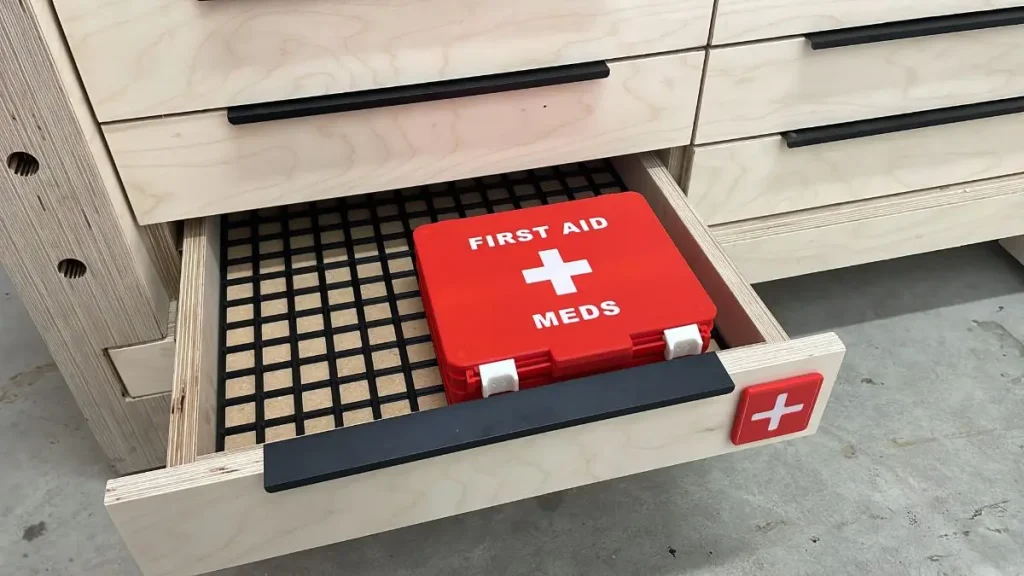
First Aid Basics Every Woodworker Should Know
Most woodworking injuries are small and annoying rather than serious. Small cuts, splinters, minor scrapes, the occasional nick. Basic first aid is usually enough to deal with them properly.
Here is what makes the biggest difference for woodworkers:
| First Aid Need | Why It Happens | What Helps |
|---|---|---|
| Small cuts | Sharp edges, slips, rough stock | Antiseptic wipes, small bandages |
| Splinters | Handling lumber, plywood edges | Tweezers, disinfectant |
| Minor burns | Sanding friction, hot tools | Cooling gel, clean water |
| Eye irritation | Dust, chips | Saline rinse, eye cup |
| Fatigue-related mistakes | Long sessions | Water, short breaks |
You do not need a large medical kit. What you need is a kit that is organized, easy to open and filled with items that match the real problems woodworkers face.
If you want a simple, practical checklist, you can look at What to Put in a First Aid Kit for Your Woodshop. It covers exactly what you need without turning it into a survival manual.
Tip: Keep your first aid kit in the same spot forever. Never move it. That way your hands know the path even when your mind is stressed.
Handling Cuts, Scrapes and Splinters
Clean the wound. Cover it. Rest for a moment.
That is the basic sequence, and it solves ninety percent of small shop injuries.
The real mistake beginners make is continuing to work too soon. A tiny cut is easy to ignore, but if your grip weakens or your mind stays preoccupied, the next mistake usually lands harder.
Splinters deserve the same calm approach. Remove them cleanly with tweezers, disinfect the spot and give your hand a few minutes. Woodworking safety is not only about avoiding accidents. It is also about returning to your tools only when your focus is steady again.
Knowing When to Stop Working
One of the most overlooked woodworking safety rules is also the simplest: stop when you feel off.
Your hands know when something feels wrong long before your brain starts forming a sentence about it. If a setup scares you, if a cut looks questionable or if you feel distracted, tired or impatient, step back for a moment.
Your shop is not a place to prove anything. It is a place to build.
Working with control is always faster than working with adrenaline.
A quick way to reset your focus:
- Turn off the tool
- Step away from the bench
- Take one slow breath
- Check your stance and support
- Begin again only when you feel grounded
Nothing in woodworking is worth pushing through discomfort. The wood will still be there after a short pause.
Setting Up Clear Zones for Safety
The safest shops in the world have one thing in common. Everything has a place, and every place has a purpose.
Clear zones reduce confusion and prevent small accidents that come from clutter or poor positioning.
Three simple woodworking safety zones that help a lot:
- Cutting Zone
The area around your saws and router table where offcuts fall and dust collects. Keep this space clear so your feet never land on something unstable. - Staging Zone
A table or bench where stock waits before or after a cut. This prevents awkward reaches and twisted movements that can throw off your balance. - Emergency Zone
A small area where your fire extinguisher, first aid kit and PPE live. Visible. Predictable. Always in reach.
These zones are not limitations. They create flow. And when your movement feels natural, your woodworking safety habits become effortless.
Kickback Awareness and Prevention
What Kickback Really Is
Kickback sounds dramatic when you first hear about it, but in reality it is simply wood reacting fast when something in the cut goes wrong. A board pinches, twists or loses support and the tool tries to push it back toward you. It is quick, surprising and uncomfortable, but it is also something you can understand and predict.
Most woodworkers remember their first kickback because it teaches a lesson you do not forget. Mine came from a narrow plywood strip that shifted at the last moment. The tool did exactly what physics tells it to do. I was lucky. And I also learned that kickback is not mysterious. It is mechanical. It happens when alignment, support or pressure fall out of balance.
Understanding this takes the fear out of it.
Once you know how boards behave, kickback becomes something you prevent instinctively instead of something that scares you into stiffness.
The Simple Signs That Kickback Is About to Happen
Kickback rarely comes without warning. The trick is knowing what to look for so you can correct it before the cut becomes risky.
Here are the most common early signals:
| Early Warning Sign | What It Means |
|---|---|
| The board begins drifting away from the fence | You are losing lateral control |
| You feel rising resistance in the cut | The wood is pinching the blade |
| The offcut starts vibrating or lifting | It has no support underneath |
| Your hands feel tense instead of steady | Something in your stance is off |
| You hear the pitch of the blade change | The saw is working harder than it should |
If one of these shows up, stop the cut, regroup and try again.
Fixing the setup takes a few seconds. Fixing the result of ignoring the warning can take much longer.
If you want to learn more about Kickback and how to prevent it, go to my article Understanding Kickback and How to Avoid It (Under construction)
Woodshop Safety Habits That Last
Why Good Habits Matter More Than Strict Rules
Every woodshop has rules, but the shops that feel truly safe do not rely on them. They rely on habits. Small, repeatable actions that take almost no mental effort yet keep you grounded in the work. Habits shape the way you move, notice things and respond to what the wood is telling you.
Rules need memory. Habits live in your body.
A beginner might look at someone who has been building for years and think they are relaxed because they are skilled. In truth it is the other way around. They built skill because they learned to stay relaxed. They know where to stand, how to hold a board, how to read a cut and when to pause. Those habits make woodworking feel like a calm conversation rather than a battle of attention.
If you build these habits now, every project becomes easier later.
Staying Focused Without Feeling Stressed
Focus in a workshop should never feel tense. Tension makes you rush, breathe faster and force tools in ways that feel wrong. True focus feels steady. It gives you the time to notice changes in resistance, vibrations, grain or posture.
Here are a few ways to stay centered without overthinking it:
- Keep your phone outside the shop or on silent
- Work in shorter sessions rather than one long block
- Adjust lighting so your eyes do not strain
- Keep a clear bench so your hands do not search for space
- Start cuts only after you feel physically comfortable
One quiet trick I use almost daily:
“If my shoulders are tight, I do not make the next cut.”
A deep breath, a small reset, and the whole shop feels different again.
Setting Up a Safe Workflow
A well planned workflow prevents more problems than any woodworking safety tips you will ever read. When your tools, materials and space support the steps you take, there is no need to twist, reach or improvise.
Think of your workflow as a smooth loop:
- Feed path: You start with your material in a stable position.
- Cut path: The tool has enough room around it.
- Exit path: Offcuts fall safely without interfering with your stance.
- Staging area: Finished parts land somewhere predictable.
A small table with open space, a clean outfeed zone and a place to set down your tools can turn a cramped shop into a surprisingly functional one.
Tip: If you ever find yourself stretching or leaning during a cut, stop. Reposition the wood or yourself. Good workflow feels natural, not athletic.
Keeping the Air Clean and the Space Clear
Good air and a clean floor sound boring, but they shape your woodworking safety more than most beginners realize. Dust makes floors slippery. Floating particles irritate eyes and lungs. Small offcuts become trip hazards at the edges of your feet.
Simple habits that make a huge difference:
- Vacuum or sweep between major stages
- Collect offcuts immediately instead of piling them
- Position your shop vac or dust collector near the main tools
- Keep scrap bins in reachable spots
- Let fresh air in if your space allows it
A clean shop is not about perfection. It is about making sure nothing interrupts your rhythm when you are holding a tool or guiding a board.
Creating a Shop You Feel Calm In
Safety is not only mechanical. It is also emotional. A shop that feels calm helps you work with attention instead of rushing. Lighting, noise, temperature and smell all shape your awareness.
Woodworkers often underestimate how much these tiny environmental cues affect their decisions. When you feel comfortable, you work slower, steadier and far more intentionally.
A few soft adjustments that help:
- Warm lighting near your bench
- A fan or simple ventilation setup
- Minimal clutter so your thoughts do not scatter
- A small speaker with quiet music if that helps you focus
- A stool or corner to take tiny breaks without leaving the shop
Your workshop should feel like a place you want to be.
When that happens, every woodshop safety decision becomes easier because it fits the mood of the space.
Woodshop Safety Rules That Actually Matter
Simple Rules You Can Remember Even When You Are Busy
A lot of woodworking safety rules sound like they came from a poster on a school wall. They are technically correct, sure, but they rarely stick in your head when you actually pick up a tool.
Real woodshop safety comes from rules you can remember on your busiest, most distracted day.
Here are the ones that matter most:
- Stand balanced, not twisted
- Keep hands away from spinning edges
- Never cut wood you cannot fully support
- Stop immediately if something feels strange
- Do not force a dull blade through a cut
These are small, almost boring rules, but they protect you far more than a long list you forget halfway through a project.
A short reminder I repeat to myself before bigger cuts: “Slow hands, steady stance.”
It sounds simple, but it keeps your body calm and your awareness sharp.
Your Body Position Is Half of Your Safety
You can have the best tools, the cleanest shop and the smartest workflow, but if your stance is off, the entire cut becomes unpredictable. Wood reacts differently depending on grain, pressure and vibration. A stable body lets you react without panic.
A few woodworking safety tips that make cuts feel easier:
- Keep your feet shoulder width apart
- Lean slightly forward instead of sideways
- Position the board so it stays in front of your chest, not off to your hip
- Move with the tool, not against it
- Keep your elbows soft so you do not push too hard
When your body feels stable, you automatically make better decisions.
It is one of the quiet truths of woodworking safety that beginners only understand after a few wobbly cuts.
Knowing When to Stop Is a Real Skill
Most accidents happen when someone pushes through a moment that felt wrong. Maybe a board vibrates a little too much, or the saw feels like it is slowing down, or the grain pulls the cut in a strange direction.
Experienced woodworkers all say the same thing:
You must learn to pause before the problem happens.
Moments when stopping is the smart move:
- Your cut line becomes hard to see
- You feel uncomfortable with your grip
- A clamp slides or loosens
- The board rocks instead of sitting flat
- You feel mentally rushed
Stopping is not a failure. It is one of the strongest woodworking safety habits you can build.
A Quick Table You Can Remember
Sometimes a simple visual helps everything click.
Here is a small table you can use as a mental checklist before any cut:
| Situation | Safe action | Why it matters |
|---|---|---|
| Board is unstable | Add support or clamp it | Prevents twisting and kickback |
| Tool sounds different | Stop and check the blade | Dull or loose blades are dangerous |
| You feel rushed | Take a short reset | Calm work avoids sloppy mistakes |
| Dust blocks your view | Clean or reposition | Seeing the line keeps the cut safe |
| Lighting feels poor | Adjust before cutting | Reduces surprise movements |
Keep it simple.
The best woodworking safety rules are the ones you can act on without thinking.
Where to Go Next
If you want to explore these woodworking materials even deeper, or you are ready to move forward in the journey, here is where you can head next.
Want more detail on this stage?
These guides belong to this chapter and cover each tool group in full.

The PPE for Woodworking I Use Daily (And Recommend)
Want to work safer and smarter in your woodshop? Here’s the exact PPE for woodworking I use every day. No fluff, just what works.
What to Put in a First Aid Kit for Your Woodshop
Discover what to put in a first aid kit for woodworking. Stay safe in your workshop with these essential tools and practical safety tips.
If you’re ready to go deeper or move forward in the journey, here’s where you can head next.
The PPE for Woodworking I Use Daily (And Recommend)
Want to work safer and smarter in your woodshop? Here’s the exact PPE for woodworking I use every day. No fluff, just what works.
What to Put in a First Aid Kit for Your Woodshop
Discover what to put in a first aid kit for woodworking. Stay safe in your workshop with these essential tools and practical safety tips.
Back to the full journey?
→ Woodworking Tools and Techniques (Main Guide)
Follow the full journey from tools to techniques to safe, accurate building.
Frequently Asked Questions
What are the most important woodworking safety rules for beginners?
Keep your hands away from blades, wear proper PPE, avoid loose clothing, and never rush a cut. Most accidents come from distraction or pushing a tool harder than it wants to go.
Do I really need eye and hearing protection for small woodworking tasks?
Yes. Even quick cuts release fine dust and small chips. Eye and ear protection make a bigger difference than any other woodworking safety tip you can follow.
How can I make my woodshop safer without buying new tools?
Improve lighting, clear your floor, manage cords and keep your work surfaces stable. Good woodshop safety starts with the space, not the machines.
What should be in a basic first aid kit for woodworking?
Gauze, antiseptic wipes, medical tape, tweezers, gloves and a few bandages. You just want to clean and protect small injuries fast so you can stay in control.
How do I avoid kickback on a table saw or other cutting tools?
Stand slightly to the side, use a sharp blade, keep the wood flat against the fence and never let the offcut get trapped. Kickback is one of the main safety tips for woodworking because it is almost always preventable.
Trusted by Woodworkers Worldwide
29,000+ woodworking enthusiasts follow my journey. Over 60 real-world workshop projects completed since 2018.
Discover proven techniques to set up a woodworking shop that grows with you

Meet Christophe
Founder & Woodwork Artisan Behind Ash Stag Woodworking
Regards, Christophe