
The first time someone I know asked if woodworking in an apartment was even realistic, I could hear the hesitation in their voice. They lived in a small space with thin walls and neighbors who seemed to notice every sound. And even though I work from a modest garage at home, about three by six meters, I could picture exactly why the idea felt risky to them.
So here is the honest part right away, because nobody likes waiting for the obvious. Yes, woodworking in an apartment can work, but only inside a narrow range of small projects, quiet tools, clean habits, and considerate choices. Step outside those boundaries and it stops being realistic almost immediately.
Once you understand those limits, the whole question shifts a little. You stop thinking in terms of fear or wishful thinking and start seeing the parts of woodworking that still fit comfortably in a tight living space.
From here, it helps to look at why the idea feels nearly impossible the moment it crosses your mind.
Why you can trust this guide
- I work from a small garage workshop of about three by six meters, so I know what tight spaces actually feel like.
- A friend has tried woodworking in an apartment, which showed me what works and what quietly falls apart.
- Everything in this guide comes from real situations, not theory or guesswork.

– Updated on
Key Takeaways
– You’ll learn where apartment woodworking works well and where it quietly falls apart.
– You’ll see how small projects and quiet tools make the biggest difference in shared walls.
– You’ll understand simple dust habits that keep your home livable while you build.
– You’ll notice when an outdoor spot is the better choice for certain cuts or sanding.
– You’ll get a clearer sense of how to build comfortably in tight living spaces without overthinking it.
Disclosure: At zero cost to you, I may get commissions for purchases made through links in this post. I earn from qualifying purchases as an Amazon associate. Products featured are selected based on quality, performance, and reputation, regardless of affiliate relationships.
Table of Contents
Why Apartment Woodworking Feels Impossible at First
When someone first brought up woodworking in an apartment, their voice dropped a bit, almost like they were admitting something unusual. And honestly, I get it. If you live in a small place with neighbors on all sides, the idea of sawing wood a few feet from your kitchen feels out of place. It sounds loud, messy and maybe even a little irresponsible.
Most of that feeling comes from imagining worst case scenarios. Screeching tools. Dust clouds. Someone upstairs tapping the floor because your timing was off. But beginners are rarely trying to build a full cabinet set indoors. They usually think small. A planter. A shelf. A cutting board. That scale is what makes the whole idea workable.
And choosing the right woodworking shop space plays a bigger role in that than people realize. Once you understand what a space can or cannot handle, the apartment question becomes a lot less intimidating.
What Most Beginners Actually Mean When They Ask This Question

The Worries Behind the Question
People rarely ask this question directly. What they really want to know is:
- Will I get noise complaints
- Will dust take over my home
- Will I annoy the neighbors
- Will this feel safe
All reasonable concerns, especially in a shared building.
The Type of Projects That Do Work Indoors
Small-scale projects stand the best chance. Cutting boards, tiny shelves, décor pieces, simple boxes, glue ups and light sanding. Things that do not demand a full workshop.
You can think about it like this:
| Project Type | Works Indoors | Needs Outdoor Space |
|---|---|---|
| Hand tool projects | Yes | No |
| Small glue ups | Yes | No |
| Light sanding | Yes | Sometimes |
| Sheet goods | No | Yes |
| Full furniture builds | No | Yes |
Quick Apartment-Friendly Project Check
Before you start, ask yourself:
- Is the project small enough to finish in one or two sessions
- Can I do this with quiet tools or mostly hand tools
- Will the sanding stay light
- Can I vacuum and clean up in a minute or two
- Does this project fit on a foldable table or bench
If you can say yes to most of these, the project probably fits apartment life.
The Ones That Usually Do Not
Anything that demands long rip cuts, heavy sanding or shaping large panels pushes beyond apartment limits. It is possible, but rarely worth the stress.
If you want a better grasp of how much room certain tasks require, understanding the ideal woodworking shop size helps put things in perspective.
Noise Realities in an Apartment Environment
“If you can hear your neighbor’s chair move, they can probably hear your tools too.”
How Far Sound Travels in Shared Walls
Sound moves in ways you do not expect. It slips through walls, floors, vents and even window frames. If you can hear your neighbor’s chair move, they can probably hear your tools a little too.
The Tools That Stay Quiet Enough
A few options usually behave well indoors:
- hand tools
- Japanese pull saws
- No products found. with softer pads
- No products found. at low speed
- No products found. with a gentle cutting rhythm
A quiet setup often comes down to how you use the tool, not just the tool itself.
Tip: Work earlier in the day than you think you need to. Most neighbors forgive a small sound at 4 PM but not at 9 PM. A simple shift in timing avoids half the stress.
When You Should Avoid Indoor Cutting
If a tool startles you when you turn it on, it will likely overwhelm a shared wall. Long ripping and surfacing rough lumber are best kept out of the living room.
Learning to spot these early signs that your space might not be ready can save you a lot of frustration.
Dust Control When You Also Live in Your Workspace
The Dust That Causes Real Problems Indoors
The fine stuff is the enemy. It floats. It sticks. It creeps under doors. And it ends up in rooms where you never touched a tool.
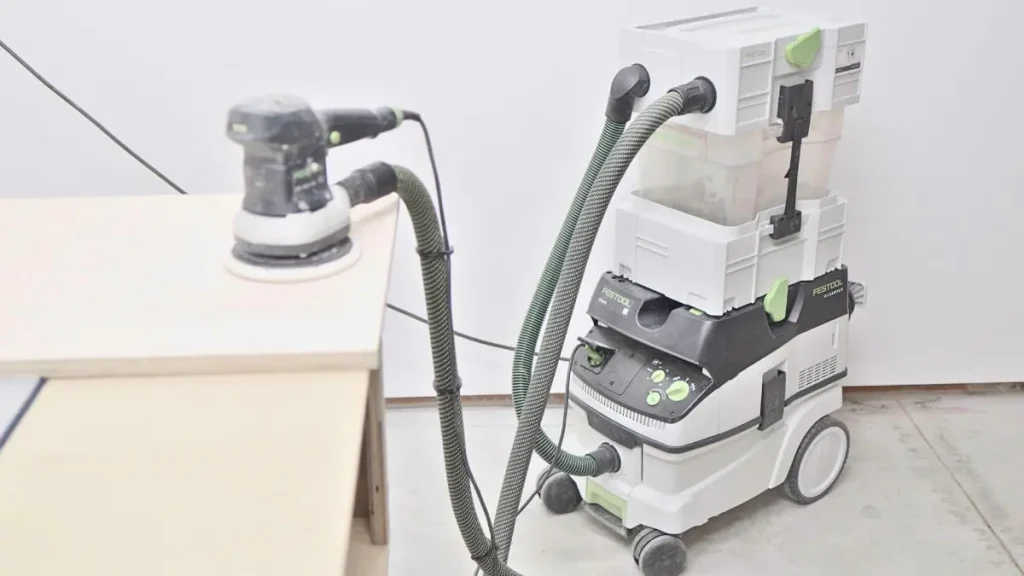
A compact, quiet dust extractor helps a lot more than people expect. My No products found. as you can see in the picture above has been the easiest way to keep dust from drifting through the room, and the No products found. on top keeps the bag almost empty so I am not constantly buying replacements. It is surprisingly quiet too, the kind of sound level that would fit an apartment without stressing over the neighbors.
Simple Ways to Keep It Contained
A few small habits make a big difference:
- a small air purifier near your workspace
- vacuuming immediately after cutting
- a damp towel on the floor while sanding
- keeping projects small enough for your space
Nothing fancy. Just small, repeatable habits.
Tip: Keep a vacuum plugged in and ready before you start. If cleanup takes five seconds instead of five minutes, you stay consistent without even thinking about it.
When You Need to Step Outside
If your cut produces a cloud, that cut probably belongs outdoors or in a communal workshop. And if you want a clearer sense of when working outside actually makes your life easier, you can read my guide Is Woodworking Outside Truly a Better Option?
Setting Up a Small, Apartment Friendly Workspace
If you are wondering how to do woodworking in an apartment, this is usually the moment where things start to click. You do not need a dedicated shop or a wall full of cabinets. You just need a spot that feels safe, steady and easy to claim for an hour or two. Most people are surprised by how workable a small corner becomes once you give it a clear purpose. If you want a lightweight structure to guide that process, I cover it in Learn How to Prepare a Woodworking Shop in 3 Easy Steps.
Foldable and Portable Work Surfaces
A No products found. or a simple tabletop that clamps to your dining table is often enough. It packs away in seconds and still feels steady enough for small projects. Stability is more important than beauty.
Tool Storage That Fits Inside a Closet
Small totes, a rolling toolbox or even a single shelf in a closet can carry most apartment setups. The goal is quick access, not permanent display.
A Fast Setup and Breakdown Workflow
This is where the success of woodworking in an apartment stands or falls. If you can grab your tools, do the work, and tidy up in one smooth motion, then the threshold remains low.
When an Outdoor Option Might Be a Better Fit

Temperature and Moisture Factors
Apartments fight noise and dust. Sheds fight temperature and moisture. Both have limits, just different ones.
How a Shed Solves Some Apartment Limits
You can consider doing woodworking in a shed. A shed gives you more volume, more airflow and fewer concerns about noise. But you trade that for temperature swings and humidity, which tools do not always appreciate.
The Line Between Possible and Not Worth It
If you constantly feel confined by the boundaries of your apartment, working outside can give you more peace of mind. Not always. Only for projects that push your boundaries.
Tip: Work slower than you think you need to. Quiet tools become quieter. Dust stays closer to the surface. Cleanup becomes easier. It is a small shift, but it helps everything else fall into place.
The Short, Honest Answer to the Original Question: Is Woodworking Allowed in Apartments
What actually works
Small projects, quiet tools and habits that keep the space clean and respectful. Within those boundaries, apartment woodworking can feel surprisingly comfortable.
Where the limits show
Anything that pushes you into construction mode. Large boards, heavy sanding, sheet goods or tools that vibrate through the entire building.
A Quiet Wrap Up: Can You Do Woodworking In an Apartment?
Woodworking in an apartment is never as simple as yes or no. It’s somewhere in between, determined by your habits, your neighbors, and the type of projects you enjoy. If you keep it small and take noise and dust into account, it’s less about fighting the limitations of your space and more about finding a rhythm that works for you.
And honestly, most woodworkers start out this way in a limited space. The setup changes over the years, confidence grows, and before you know it, you can sense when something is feasible and when it’s better done elsewhere. It’s a small progression, but one you feel with every step you take.
Where you go from here is entirely up to you. This article just helps you look at your space with a clearer head.
Where This Article Fits in Your Woodworking Journey
This supporting post lives inside a much larger path on my site, one that helps beginners move from doubt to a functional first workspace.
1. Main guide:
Set Up a Woodworking Shop Without Wasting Space This is the big picture that guides everything in the early stages.
2. Second Guide Level (comes right after the main guide’s introduction):
Woodworking Shop for Beginners: 3 Steps to Claim Your Space Here you’ll find the first real decisions about choosing and preparing a workable area.
3. Cluster Post (the one that leads into this supporting article):
Choosing the Perfect Woodworking Shop Space This cluster focuses on finding, judging and preparing the actual spot where your woodworking will happen.
Frequently Asked Questions
Can I do small woodworking projects indoors without upsetting my neighbors?
Yes, as long as you keep the work light and choose tools that stay reasonably quiet. Most neighbors barely notice hand tools or gentle sanding during the day.
What tools are safest to use inside an apartment?
Hand tools, a small pull saw, a cordless sander and a trim router on low speed are usually fine. The quieter your setup feels to you, the safer it is in shared walls.
How do I keep dust under control when I live in the same space?
Work small, vacuum right after each step and let a small air purifier run nearby. A few simple habits go a long way in tight spaces.
Is woodworking in an apartment realistic if I want to build simple furniture?
Only if the projects stay small. Anything with long boards, sheet goods or heavy sanding usually needs an outdoor area or a dedicated workshop.
What should I do if my apartment feels too limiting for woodworking?
You can mix indoor tasks with outdoor cuts, use a shared workspace or even explore a small shed if the climate allows it. Many beginners use a hybrid approach until they have more room.






Leave a Reply